this article is a guide to compliance requirements and cost estimation for enterprises migrating to german data rooms. it focuses on the german and eu data protection environments, computer room technology and contract compliance, as well as cost factors and risk control suggestions before and after migration, to help with decision-making and budget preparation.
in germany, the gdpr together with local federal data protection laws (such as the bdsg) form the regulatory framework. supervision emphasizes the rights of data subjects, processing transparency and minimization principles, and regulatory enforcement efforts vary between states and industries, and must be evaluated in conjunction with industry compliance requirements.
businesses need to identify the lawful basis for processing, record processing activities, conduct a data protection impact assessment (dpia) and appoint a data protection officer (dpo) where necessary. cross-border transfers require appropriate safeguards (such as standard contractual clauses or adequacy decisions) and a transfer risk assessment.
computer room compliance includes physical and technical controls in addition to regulations: access control, video surveillance, redundant power supply and cooling, network segmentation, intrusion detection, and log management. adopt encryption, backup and recovery strategies to meet availability and confidentiality requirements.
sign a clear data processing agreement (dpa) with the computer room supplier to specify the boundaries of responsibilities, sub-processor review, incident notification and audit rights. supply chain compliance inspections should cover third-party security capabilities and legal compliance status.
before migration, data inventory and classification, dpia, permission and consent review, test migration and rollback plan development must be completed. clarify business priorities and minimization principles to ensure that there is no risk of illegal processing or data leakage during the migration process.
the cost estimate should include cabinet or computer room rental, bandwidth and interconnection, power and cooling, physical and network security, migration implementation project fees, compliance and legal consulting, auditing and certification, operation and maintenance and monitoring tools, etc.
one-time expenses usually include equipment purchase, migration implementation, testing and auditing; ongoing expenses include computer room rental, bandwidth, electricity, maintenance, security operation and maintenance, compliance audits and personnel costs. classifying expenses into periodic categories can help with budget control.
adopting phased migration, prioritizing key businesses, reusing compliance templates, automating auditing and monitoring, cooperating with local compliance-friendly suppliers, and clarifying responsibility sharing in the contract can effectively control compliance and operating costs.
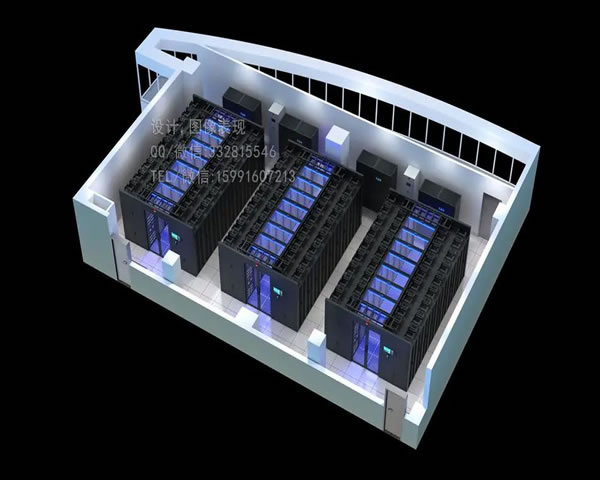
when carrying out compliance requirements and cost estimates for migrating an enterprise to a german data room, it is recommended to first complete data mapping and dpia, consult with legal and compliance experts, formulate a phased migration and rollback plan, and develop a long-term budget and monitoring mechanism based on one-time and ongoing expenses.
- Latest articles
- How To Optimize Cross-border E-commerce Access Speed And Stability Through Cambodia Cn2 Return Server
- Cambodian Server Alibaba Cloud’s Practical Experience In Network Acceleration And CDN Integration
- How To Set Up A Korean Purchasing Agent Group? Precautions And Risk Control Strategies For Compliance Operations
- Practical Experience Sharing On Vps Cambodia Node Selection And Global Deployment Strategy
- Operation And Maintenance Exchange American Cloud Server Bar Common Troubleshooting And Response Experience
- Migration Case Analysis: How To Smoothly Switch To Singapore Cn2 Cloud Server And Ensure That Business Is Not Dropped
- A Beginner's Guide Teaches You How To Identify The Service Quality And Potential Risks Of Cheap Hong Kong Site Groups
- How SEO Webmasters Use Vietnam Cn2 To Improve Search Rankings In The Vietnamese Market
- Comparing The Cost-effectiveness And User Experience Of Triple-network Cn2 Malaysia With Single-network Access
- How Can Enterprises Incorporate Free Unlimited Traffic Hong Kong Cn2 Into Disaster Recovery And Capacity Expansion Plans?
- Popular tags
-

Analysis Of Functions And Advantages Of Network Computer Rooms Designed By Germans
in-depth analysis of the functions and advantages of the network computer room designed by germans and discussion of its importance in the data center. -

Troubleshooting Section: How To Check Each Item When Connection Failure Occurs On A German Surveillance Server
Troubleshooting section: Item-by-item detection methods when a German surveillance server connection fails. Covers practical steps such as network connectivity, IP/DNS, ports and firewalls, certificates and TLS, authentication permissions, clock synchronization, log packet capture, and hardware links. -

Procurement Guide And Recommendations For Imported Villa Computer Room Equipment In Germany
Learn about the procurement guide and recommendations of imported villa computer rooms in Germany, help you choose the best equipment and improve the intelligent home experience.